Mahoning County juvenile court handles cases involving minors, family disputes, custody matters, delinquency hearings, and child protection proceedings across Ohio’s legal system. Court records often contain filing details, hearing schedules, probation updates, and judicial decisions connected to youth-related cases. Parents, guardians, attorneys, and residents search these records for case status information, legal paperwork, and court procedures linked to juvenile justice matters in Mahoning County. Public interest in juvenile proceedings continues to grow through online court search services and county legal resources.
Mahoning County court records related to juvenile matters include dependency cases, custody filings, guardianship disputes, and youth offender proceedings. Residents often search court dockets, hearing dates, filing requirements, and case updates connected to family-related legal matters. The juvenile division supports child welfare cases and legal protections involving minors across Mahoning County. Online record systems, clerk filings, and court databases help parents, legal representatives, and community members locate case-related information through official county resources.
How to Search Mahoning County Juvenile Court Records
Mahoning County juvenile court records can be searched through the official online case lookup portal by entering a person’s name, case number, or filing details. The Mahoning County Court search system helps users review hearing schedules, case status updates, docket activity, and public family court information connected to juvenile proceedings in Ohio. The Mahoning County juvenile proceeding lookup system contains multiple search filters that help users locate youth-related cases more accurately. Proper field selection improves search results and helps users review child court proceedings without extra delays.
Open the Official Court Search Tool
Start by opening the official Mahoning County court record portal: https://ecourts.mahoningcountyoh.gov/eservices/search.page.10?x=n2I4vbobk3kmhkJSBdRTgA
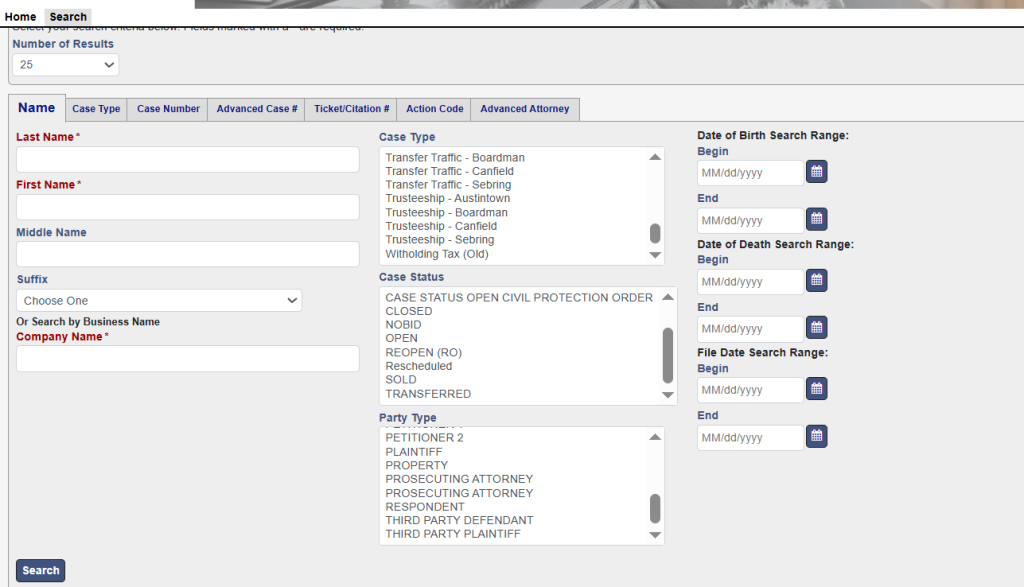
The portal contains several search tabs, including:
- Name Search
- Case Type Search
- Case Number Search
- Attorney Search
- Citation Search
Users searching juvenile court records usually begin with the Name tab shown in the search tool.
Enter the Person’s Name
The left side of the portal contains the main search form. Users should enter the available details carefully before running the search.
Required Fields
The system usually requests:
| Field Name | Purpose |
|---|---|
| Last Name | Required for most searches |
| First Name | Helps narrow results |
| Middle Name | Optional |
| Suffix | Optional |
Correct spelling improves result accuracy inside the youth case database.
Example Entry
| Field | Example |
|---|---|
| Last Name | Johnson |
| First Name | Michael |
| Middle Name | Allen |
The business name section is normally not used for juvenile matters.
Select the Correct Juvenile Case Type
The center section of the portal contains the Case Type filter. This area helps users narrow results connected to youth proceedings and family hearings.
Juvenile-Related Case Types May Include
- Juvenile Delinquency
- Juvenile Traffic
- Dependency
- Custody
- Parentage
- Child Support
- Guardianship
Users should avoid unrelated categories such as:
- Transfer Traffic
- Trusteeship
- Civil Tax Matters
The case type filter improves child court records access by removing unrelated court files from the results page.
Choose a Case Status
The next filter section contains the Case Status list. This option helps users locate active or completed proceedings.
Common Status Options
| Status | Meaning |
|---|---|
| OPEN | Active juvenile matter |
| CLOSED | Completed proceeding |
| REOPEN | Reopened case |
| Rescheduled | Hearing date changed |
Users searching current hearings often select OPEN. Full record searches may include both OPEN and CLOSED statuses.
Add Date Filters for Better Results
The right side of the search portal contains date search filters. These fields help narrow the record list and reduce unrelated matches.
Available Date Filters
- Date of Birth Search Range
- File Date Search Range
- Date of Death Search Range
The filing date filter works well for recent juvenile court records Ohio searches.
Example Date Filter
| Begin Date | End Date |
|---|---|
| 01/01/2025 | 12/31/2025 |
Date filters help users locate family hearing information more quickly.
Press the Search Button
After entering all search details, users should press the blue Search button located at the bottom left of the screen.
The system may then display:
- Case numbers
- Hearing schedules
- Filing dates
- Assigned judges
- Court actions
- Docket activity
- Attorney information
- Case status updates
Many users perform a juvenile case lookup Mahoning County search through name filters combined with case type selections.
Best Search Method for Accurate Results
The Mahoning County court system contains several search methods. Some produce faster results than others.
Search Method Comparison
| Search Type | Accuracy Level |
|---|---|
| Case Number Search | High |
| Name Search | Medium |
| Attorney Search | Medium |
| Citation Search | Limited juvenile use |
Case number searches usually return the most direct results.
What Users Can Review in Juvenile Court Records
Public juvenile records may contain limited court details depending on Ohio privacy laws. Some files involving minors remain sealed or partially restricted.
Information Often Available
- Hearing dates
- Filing activity
- Courtroom assignments
- Judge names
- Probation reviews
- Custody proceedings
- Docket entries
- Scheduled appearances
The Mahoning County juvenile court portal helps parents, attorneys, researchers, and residents review child-related court activity through the online case lookup system.
Types of Cases Handled in Mahoning County Juvenile Court
Mahoning County juvenile court handles multiple youth legal disputes involving minors, parents, guardians, and family-related matters. The court reviews juvenile case proceedings connected to delinquency allegations, child custody disputes, family welfare court actions, and youth behavioral intervention cases across Ohio. Judges examine evidence, hearing records, probation reports, and family conditions before making legal decisions. Many proceedings focus on rehabilitation, child safety, supervision, and parental responsibilities. The court system also works with social services, schools, probation departments, and legal representatives during hearings involving minors and family protection matters.
Delinquency Cases
Delinquency cases Mahoning County courts handle involve minors accused of violating laws or engaging in unlawful conduct. These juvenile misconduct hearings may include theft, assault, vandalism, school-related incidents, drug offenses, or probation violations. The juvenile court system focuses on behavioral correction, rehabilitation programs, and supervised intervention instead of adult criminal penalties. Judges often review school attendance, prior incidents, family background, and probation reports during hearings. Some youth behavioral intervention cases may result in counseling programs, probation supervision, community service requirements, or placement in juvenile detention facilities depending on the severity of the offense.
- Theft and shoplifting cases
- Drug-related offenses
- Probation violations
- Assault or disorderly conduct
- Juvenile detention hearings
Custody Hearings
Custody hearings in Mahoning County juvenile court involve child custody disputes between parents, guardians, or caretakers seeking legal responsibility for minors. These hearings determine living arrangements, visitation schedules, decision-making authority, and parental rights proceedings connected to child welfare. Judges review financial stability, home conditions, school records, caregiver involvement, and safety concerns before issuing custody decisions. Many family welfare court actions focus on protecting stable environments for minors during family disputes. Emergency custody filings may occur if the court believes the child faces unsafe living conditions or immediate risk within the household.
- Child custody disputes
- Visitation schedule reviews
- Guardianship proceedings
- Emergency custody requests
- Parental rights proceedings
Child Neglect and Abuse Cases
Child neglect and abuse cases involve allegations that a minor has suffered physical harm, emotional mistreatment, unsafe supervision, or failure of proper care. Mahoning County juvenile court reviews these family welfare court actions carefully through hearings, investigations, and child safety reports. Social workers, law enforcement agencies, and child protection departments often participate during proceedings involving minors. Judges may issue temporary custody orders, supervised visitation restrictions, or emergency placement decisions. These juvenile case proceedings focus on protecting children, improving living conditions, and preventing continued neglect or abuse within the home environment.
- Physical abuse investigations
- Emotional neglect allegations
- Unsafe living condition reviews
- Child protection hearings
- Temporary custody placements
Family Protection Proceedings
Family protection proceedings in Mahoning County juvenile court involve legal actions intended to protect minors and vulnerable family members from harm or unsafe situations. These proceedings may include emergency protective orders, domestic conflict matters, supervised visitation requests, or family safety interventions. Judges review testimony, police reports, court filings, and social service evaluations before issuing protective rulings. Many family protection cases Ohio courts handle involve urgent circumstances requiring immediate court attention. The juvenile court system works to maintain child safety, structured family arrangements, and lawful supervision during high-conflict family disputes or behavioral concerns.
- Emergency protection requests
- Domestic conflict hearings
- Supervised visitation orders
- Family safety evaluations
- Temporary protective rulings
Juvenile Traffic Offenses
Juvenile traffic offenses involve minors accused of violating Ohio traffic laws while operating vehicles. These juvenile case proceedings may include speeding violations, reckless driving, operating without a valid license, or failure to follow traffic signals. Mahoning County juvenile court reviews driving history, citation details, accident reports, and prior traffic violations before issuing decisions. Some youth legal disputes related to driving offenses may result in fines, license restrictions, driving education programs, or probation supervision. Repeat violations can lead to stricter penalties and longer court monitoring for the juvenile driver.
Delinquency Cases and Youth Offender Proceedings
Delinquency cases that the Mahoning County courts handle involve minors accused of violating laws or engaging in unlawful conduct before reaching adulthood. These adolescent legal cases focus on behavioral correction, supervision, and rehabilitation through structured juvenile court procedures instead of adult criminal punishment. Mahoning County juvenile court reviews youth accountability hearings involving school incidents, theft offenses, assault allegations, probation violations, and other juvenile offense hearings. Judges examine family background, school performance, prior incidents, and community safety concerns before issuing court decisions connected to youth offender records Mahoning County proceedings.
Definition of Juvenile Delinquency
Juvenile delinquency refers to unlawful behavior committed by minors under Ohio juvenile law. These minor offense proceedings are handled within juvenile court rather than adult criminal court systems. The purpose of juvenile proceedings is to correct harmful behavior and encourage positive development through supervision and court intervention. Mahoning County juvenile court reviews evidence, police reports, school records, and probation recommendations during hearings. Many adolescent legal cases involve first-time offenders, though repeat offenses may result in stricter court-supervised juvenile correction programs or detention placement for continued misconduct and public safety concerns.
- Juvenile misconduct allegations
- School-related behavioral incidents
- Repeat offense proceedings
- Youth accountability hearings
- Court intervention programs
Common Offenses in Juvenile Court
Mahoning County juvenile courts handle several categories of youth-related offenses connected to unlawful conduct or behavioral concerns. These juvenile offense hearings may involve property crimes, public disturbances, traffic matters, or probation violations committed by minors. Judges review the seriousness of the offense, prior case history, family conditions, and community impact before determining court action. Some youth offender records Mahoning County proceedings involve counseling requirements, probation supervision, or temporary detention depending on the offense severity and behavioral history of the minor.
- Theft and shoplifting cases
- Assault allegations
- Drug possession offenses
- Vandalism complaints
- Disorderly conduct incidents
- School disciplinary violations
- Juvenile traffic offenses
- Probation violations
Court Rehabilitation Process
The Mahoning County juvenile court system focuses heavily on rehabilitation instead of long-term punishment. Court-supervised juvenile correction programs often include counseling, behavioral treatment, educational support, and structured supervision aimed at reducing repeat offenses. Judges may order minors to attend youth rehabilitation programs, community service assignments, mentoring sessions, or family counseling after reviewing the details of the case. Many minor offense proceedings emphasize accountability, school participation, and positive behavioral improvement. Rehabilitation plans are often customized based on the juvenile’s age, offense history, home environment, and risk factors connected to continued misconduct or unsafe behavior.
- Counseling programs
- Behavioral intervention services
- Educational improvement plans
- Community service assignments
- Family counseling sessions
- Drug or alcohol treatment programs
Probation and Supervision
Probation and supervision play a major role in delinquency cases Mahoning County juvenile courts manage each year. Juvenile probation officers monitor court compliance, school attendance, curfew restrictions, counseling participation, and behavioral progress after court rulings. Many adolescent legal cases remain under active supervision for weeks or months depending on offense severity and prior conduct history. Probation reviews may include scheduled court appearances, progress evaluations, drug testing, or community monitoring. Failure to follow court orders can lead to stricter youth accountability hearings, detention placement, or expanded court-supervised juvenile correction requirements for the juvenile offender.
Custody Hearings and Family Protection Cases
Custody hearings in juvenile court proceedings involve legal disputes related to child care, parental responsibilities, visitation rights, and family safety matters. Mahoning County juvenile court reviews family protection cases. Ohio courts manage to protect minors, maintain stable living conditions, and address child welfare concerns through structured legal hearings. These child welfare proceedings often involve parental custody disputes, abuse investigations, neglect allegations, and protective family court orders connected to minors. Judges review testimony, social service reports, school information, and household conditions before issuing custody rulings or family protection decisions.
Child Custody Hearings
Child custody hearings determine which parent, guardian, or caretaker receives legal responsibility for a minor. Mahoning County juvenile court reviews parental custody disputes involving visitation schedules, residential placement, decision-making authority, and shared parenting arrangements. Judges examine family relationships, financial stability, school attendance, medical needs, and home safety before issuing custody decisions. Many custody hearings juvenile court proceedings focus on maintaining stable living environments and protecting the child’s emotional and physical well-being. Temporary custody rulings may remain active until the court completes additional hearings, investigations, or welfare evaluations connected to the family dispute.
- Temporary custody requests
- Shared parenting arrangements
- Visitation schedule disputes
- Guardian appointment hearings
- Residential placement decisions
Parental Rights Matters
Parental rights matters involve legal questions connected to custody authority, visitation privileges, child support obligations, and parental responsibilities. Mahoning County juvenile court handles these child welfare proceedings during disputes involving guardianship concerns, custody conflicts, or family instability. Judges review parenting history, home conditions, communication records, and child care involvement before issuing legal rulings. Some family protection cases Ohio courts review may involve requests to limit, suspend, or restore parental rights under certain conditions. Court decisions focus on child safety, proper supervision, and long-term family stability during ongoing parental custody disputes or related legal proceedings involving minors.
- Parental visitation hearings
- Custody authority reviews
- Guardianship proceedings
- Child support matters
- Supervised visitation orders
Abuse and Neglect Investigations
Abuse and neglect investigations involve allegations that a child faces physical harm, emotional mistreatment, unsafe living conditions, or failure of proper care. Mahoning County juvenile court works with child protection agencies, social workers, and law enforcement during these family protection proceedings. Judges examine medical records, investigation reports, school information, witness testimony, and household conditions before issuing court orders. Many child welfare proceedings involve emergency placement requests, supervised visitation restrictions, or temporary custody changes. These protective family court orders focus on removing minors from unsafe environments and preventing continued abuse, neglect, or harmful supervision inside the household.
- Physical abuse investigations
- Emotional neglect claims
- Unsafe home environment reviews
- Child Protective Services reports
- Temporary child placement hearings
Emergency Protection Orders
Emergency protection orders are court-issued directives intended to protect minors and family members from immediate danger or harmful situations. Mahoning County juvenile court may issue these protective family court orders during urgent family disputes, abuse investigations, or domestic conflict proceedings. Judges often review police reports, emergency petitions, witness statements, and social service findings before approving temporary legal protections. Many family protection cases Ohio courts manage involve supervised contact restrictions, temporary custody orders, or emergency removal decisions for child safety reasons. Emergency hearings are often scheduled quickly when the court believes a minor faces immediate physical or emotional risk.
Juvenile Justice System in Ohio
The juvenile justice system Ohio courts operate focuses on handling legal matters involving minors through rehabilitation, supervision, and structured court intervention. Youth court Ohio proceedings address unlawful conduct, family-related disputes, and behavioral concerns involving children and teenagers under state juvenile laws. Ohio juvenile courts aim to correct behavior, protect minors, and support long-term stability through the rehabilitative justice system. Judges, probation officers, counselors, schools, and social service agencies often work together during juvenile proceedings involving youth legal protection rights and court-supervised correction programs.
Ohio Juvenile Court Structure
Ohio’s juvenile legal framework operates through county juvenile courts that handle legal matters involving minors under the age of eighteen. Mahoning County juvenile court functions as part of this statewide youth court Ohio system and reviews cases connected to delinquency, custody disputes, abuse investigations, and juvenile traffic matters. Juvenile courts follow state laws established under the Ohio Revised Code and local court procedures. Judges oversee hearings involving minors, parents, guardians, attorneys, probation officers, and child welfare agencies. Many courts maintain separate divisions for delinquency cases, child welfare proceedings, and parental custody disputes involving family-related legal matters.
- Delinquency case hearings
- Child welfare proceedings
- Custody and guardianship matters
- Juvenile traffic offenses
- Family protection hearings
Rehabilitation vs Punishment
The juvenile justice system Ohio courts use places stronger focus on rehabilitation instead of adult-style punishment. Courts aim to correct harmful behavior through counseling, supervision, education programs, and structured intervention rather than long-term incarceration. Many youth court Ohio proceedings involve first-time offenders or behavioral concerns connected to school issues, family instability, or peer influence. Judges often assign youth rehabilitation programs, probation supervision, community service, counseling sessions, or behavioral treatment plans after reviewing the case. Serious or repeat offenses may result in detention placement, though courts still prioritize long-term behavioral improvement and public safety through the rehabilitative justice system.
- Counseling and therapy programs
- Probation supervision
- Educational intervention plans
- Community service assignments
- Behavioral correction programs
Rights of Minors in Court
Minors involved in juvenile proceedings receive several legal protections under Ohio law. These youth legal protection rights help minors participate fairly during hearings connected to delinquency allegations, custody disputes, or child welfare proceedings. Juveniles may receive legal representation, notice of charges, hearing opportunities, and protection against unfair treatment during court proceedings. Parents or guardians are often involved throughout the process depending on the case type. Judges review evidence carefully before issuing legal decisions involving detention, probation, custody arrangements, or family protection matters. Some juvenile records remain confidential under the Ohio juvenile legal framework to protect the privacy of minors.
Juvenile Court Hearings and Legal Procedures
Juvenile cases Mahoning County courts process follow a structured set of hearings that handle minors involved in delinquency, custody, or child welfare matters. Juvenile court proceedings Ohio systems use are designed to evaluate evidence, determine responsibility, and decide appropriate corrective actions for youth cases through formal legal steps. These family court legal procedures move through multiple stages, including initial hearings, detention reviews, adjudication, and disposition hearings. Each stage focuses on youth hearing schedules, case evaluation, and decisions connected to rehabilitation, supervision, or placement based on juvenile adjudication process standards.
Initial Hearings
Initial hearings mark the first stage of juvenile court proceedings Ohio courts conduct after a minor is charged or referred to court. During this stage, the court informs the juvenile and guardians about the allegations, legal rights, and next steps in the case. Mahoning County juvenile court reviews basic case details, assigns counsel if required, and sets future hearing dates. Judges may also decide whether the minor remains at home or is placed under temporary supervision. These youth hearing schedules help organize the legal process while maintaining structure for upcoming court actions and evaluations.
- Review of charges or allegations
- Legal rights explanation
- Assignment of legal representation
- Scheduling future hearings
- Temporary supervision decisions
Detention Hearings
Detention hearings determine whether a minor should remain in custody or be released while waiting for further court proceedings. In juvenile cases Mahoning County courts handle, these hearings usually occur shortly after an arrest or detention. Judges evaluate risk factors such as safety concerns, prior offenses, and the likelihood of appearing at future hearings. If necessary, temporary detention may be ordered. Otherwise, the juvenile may be released under supervision or placed with guardians. These decisions are part of structured family court legal procedures designed to balance safety and fairness.
- Risk assessment reviews
- Release or detention decisions
- Supervised release conditions
- Guardian placement options
- Court appearance requirements
Adjudication Process
The adjudication process functions similarly to a trial in juvenile court proceedings in Ohio systems use. During this stage, the court reviews evidence, witness statements, and legal arguments related to the juvenile case. The Mahoning County juvenile court determines whether the minor is responsible for the alleged offense. Judges examine police reports, school records, and testimony before making a decision. This juvenile adjudication process focuses on fact evaluation rather than punishment, ensuring fair review of youth-related allegations within structured legal procedures.
- Evidence presentation
- Witness testimony review
- Legal argument evaluation
- Responsibility determination
- Court ruling on allegations
Disposition Hearings
Disposition hearings take place after adjudication and focus on deciding the outcome of the juvenile case. These hearings determine the corrective action or rehabilitation plan for the minor involved in juvenile cases in the Mahoning County courts. Judges consider the severity of the offense, prior record, family situation, and behavioral history. Outcomes may include probation, counseling, community service, or placement in a youth facility. These decisions are part of broader family court legal procedures aimed at correction, supervision, and long-term behavioral improvement.
Public Access Rules for Juvenile Court Records
Juvenile court records Ohio systems handle are subject to strict confidentiality rules that limit public visibility of cases involving minors. Mahoning County juvenile court follows state privacy laws that protect protected minor records and restrict open access to sensitive information connected to youth proceedings. These rules are designed to safeguard confidential child proceedings while still allowing limited restricted legal access for authorized parties such as parents, attorneys, and court officials. Many youth offender records Mahoning County systems hold remain sealed or partially hidden to protect juvenile identity, safety, and long-term privacy.
Confidentiality Protections in Juvenile Court
Juvenile courts apply strong confidentiality protections to prevent unauthorized exposure of sensitive case details. These protections cover protected minor records related to delinquency, custody disputes, abuse investigations, and family protection matters. Mahoning County juvenile court limits public visibility of names, case documents, and hearing details in many situations. Only approved parties can review confidential child proceedings, while general public users may see only limited court docket information or case status updates. These privacy safeguards support youth rehabilitation and reduce long-term harm from public exposure.
- Restricted case details
- Limited public case visibility
- Protected juvenile identity data
- Controlled court document release
- Secure record handling procedures
Restricted Public Access Rules
Restricted legal access rules determine what information can be viewed through juvenile court records Ohio systems. Many records involving minors are not fully available to the public due to legal privacy protections. In Mahoning County juvenile court, users may only see basic case information such as hearing dates or general status updates. Sensitive details like victim information, psychological reports, or sealed testimony remain hidden. These restrictions help maintain confidentiality while still supporting lawful court transparency where permitted.
- Limited case detail visibility
- Restricted document viewing
- Partial docket information access
- Controlled hearing information release
- Protected sensitive data sections
Sealed Juvenile Records
Sealed court documentation refers to cases that are completely hidden from public access after court approval. Youth offender records Mahoning County courts seal often involve resolved cases, dismissed charges, or eligible rehabilitation completions. Once sealed, these records cannot be viewed through standard public portals. Only authorized government agencies or court-approved entities may access them under specific legal conditions. Sealing helps minors move forward without long-term impact from past juvenile behavior or confidential child proceedings.
- Court-approved record sealing
- Hidden case history files
- Limited government-only access
- Removed public search visibility
- Long-term privacy protection
Privacy Laws for Minors
Privacy laws for minors in Ohio establish legal safeguards for all juvenile court matters. These laws ensure that juvenile court records Ohio systems maintain strict control over sensitive data involving children and teenagers. Mahoning County juvenile court follows these regulations by limiting public reporting, restricting record sharing, and protecting the identities involved in youth cases. These laws support rehabilitation, protect family stability, and prevent unnecessary exposure of confidential child proceedings within public record systems.
How Juvenile Case Status Updates Work
Juvenile case lookup Mahoning County systems allow users to review ongoing updates related to youth cases through structured court records. Juvenile court records Ohio databases update case progress as hearings occur, custody changes are issued, or supervision decisions are made by the court. These updates help track child proceeding updates, hearing schedules, and court supervision monitoring linked to delinquency, custody disputes, and family protection matters. Mahoning County juvenile court records change over time as judges review evidence, issue rulings, and modify case conditions based on new information or compliance status.
Active Case Monitoring
Active case monitoring refers to tracking ongoing juvenile cases while they remain open in court. Mahoning County juvenile court updates case records when new filings, motions, or court actions occur during proceedings. Users may see changes related to youth case progress tracking such as probation updates, scheduled hearings, or compliance checks. These updates reflect the current status of the case and help parents, guardians, and attorneys stay informed about court activities involving minors.
- Open case status tracking
- Filing activity updates
- Ongoing court review notes
- Probation monitoring updates
- Case activity logs
Hearing Updates in Juvenile Cases
Hearing updates show scheduled court appearances, rescheduled dates, or completed hearings within juvenile proceedings. Juvenile court records Ohio systems update hearing schedules when judges adjust court calendars or issue new hearing notices. Mahoning County juvenile court may update records after detention hearings, custody hearings, or adjudication sessions. These updates help users follow child proceeding updates without needing physical court visits.
- Scheduled hearing dates
- Rescheduled court appearances
- Completed hearing records
- Emergency hearing notices
- Court calendar adjustments
Custody Status Changes
Custody status changes occur when the court modifies a child’s living arrangement or guardianship order. These updates are common in juvenile case lookup Mahoning County records involving family disputes or welfare concerns. Judges may shift custody between parents, assign temporary guardians, or issue supervised visitation orders. These changes are recorded in the system to reflect current legal responsibility for the minor and ensure accurate youth case progress tracking.
- Temporary custody orders
- Guardian assignment updates
- Visitation modifications
- Emergency placement changes
- Parental rights adjustments
Court Supervision Progress
Court supervision monitoring tracks how a minor follows probation rules, counseling requirements, and behavioral conditions set by the court. Mahoning County juvenile court updates supervision status based on reports from probation officers and compliance reviews. Juvenile court records Ohio systems may reflect progress in counseling programs, school attendance, community service, or behavioral improvement plans. Positive compliance may lead to reduced supervision, while violations may result in stricter conditions or additional hearings.
Frequently Asked Questions
Mahoning County juvenile court handles youth legal proceedings involving minors, family disputes, custody matters, and rehabilitation-focused decisions. These FAQs explain common questions about juvenile cases Mahoning County residents often ask related to court procedures, record access, and youth legal protections.
What cases are handled in Mahoning County Juvenile Court?
Mahoning County juvenile court handles a wide range of youth legal proceedings involving minors under Ohio law. These cases include delinquency matters, custody disputes, child neglect investigations, and family protection hearings. Courts also manage probation violations, juvenile traffic offenses, and guardianship cases. Each matter focuses on child safety, behavioral correction, and structured family court protections designed to support rehabilitation and long-term stability for minors involved in legal proceedings.
Are juvenile court records public in Ohio?
Juvenile court records Ohio systems are partially restricted due to privacy laws protecting minors. Most youth legal proceedings are confidential and not fully available to the public. Only limited case details such as hearing dates or general case status may appear in public systems. Sensitive documents, sealed files, and protected minor records remain hidden under Ohio juvenile privacy laws. Access is usually limited to parents, attorneys, and authorized court officials.
What happens during juvenile delinquency hearings?
Juvenile delinquency hearings involve court review of allegations against a minor for unlawful behavior or rule violations. Judges examine evidence, witness statements, school reports, and prior records during youth legal proceedings. The court then decides whether the minor is responsible for the offense. If proven, outcomes may include probation, counseling, community service, or juvenile rehabilitation programs instead of adult penalties. The process focuses on correction and behavior improvement.
How do custody hearings work in juvenile court?
Custody hearings in Mahoning County juvenile court determine who has legal responsibility for a child. Judges review parental custody disputes, home conditions, financial stability, and child welfare concerns. Decisions may include shared custody, sole custody, or supervised visitation arrangements. The court prioritizes family court protections and child safety when issuing rulings. Temporary custody orders may also be issued during ongoing family proceedings until final decisions are made.
What is the juvenile justice system in Ohio?
The juvenile justice system Ohio operates is a court-based structure that handles cases involving minors through rehabilitation instead of punishment. Youth court Ohio focuses on correcting behavior through counseling, probation, education, and structured supervision. Courts handle delinquency cases, custody matters, and child protection proceedings under state juvenile laws. The system emphasizes youth legal proceedings that support rehabilitation programs, family stability, and long-term positive behavioral outcomes.
Can I search youth offender records online?
Youth offender records Mahoning County may be partially available through official court portals, but full access is restricted. Juvenile case lookup Mahoning County systems typically show limited details such as hearing dates, case status, or docket entries. Confidential child proceedings and sealed records are not publicly accessible. Only authorized users such as parents, attorneys, or court officials can view restricted juvenile files under Ohio privacy laws.