Mahoning County civil court handles a wide range of non-criminal legal matters involving disputes between individuals, businesses, and organizations. Cases often include contract disagreements, property claims, landlord-tenant issues, and monetary judgments. The civil court system maintains structured filing procedures and case processing within county jurisdiction. Public records may reflect hearings, filings, and final decisions related to ongoing or closed matters. This system supports legal dispute resolution through formal proceedings within the Mahoning County judicial framework. Civil filings follow set procedures reviewed by county clerks and court offices.
Mahoning County civil court records reflect case activity related to disputes, claims, and legal decisions filed within the jurisdiction. These records may include motions, judgments, scheduling details, and settlement outcomes across different civil matters. Parties involved in litigation often submit documentation through formal filing channels maintained by the court system. Case tracking and docket entries provide structured information about ongoing proceedings and resolved matters within the county legal system. Public record availability depends on case type and applicable state regulations governing civil filings.
How to Search the Mahoning County Civil Court
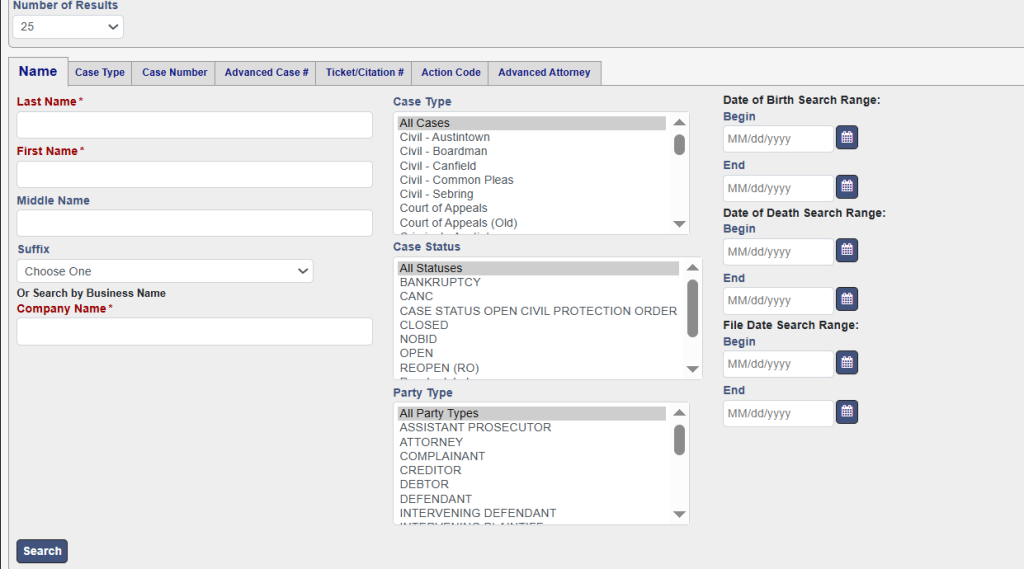
Mahoning County civil court cases can be searched through the official eCourts system that provides public records for civil filings, judgments, and case activity. Users can find lawsuit records by entering a party name or case number into the search fields. The system organizes civil docket data in a structured format, making it easier for Mahoning County Court users to review litigation history, court filings, and case status updates. It supports different search filters that help narrow results and locate specific civil court records within the county database.
Official Civil Case Search Portal
Mahoning County civil court records are available through the official eCourts search portal, which functions as a centralized judicial record database. This system includes civil, criminal, and other court-related records maintained by the county courts. Users can open the portal directly through the official link and begin searching case details using basic identifiers. It is widely used for reviewing civil litigation records, tracking court proceedings, and checking judgment information for public cases filed within Mahoning County.
https://ecourts.mahoningcountyoh.gov/eservices/search.page.10?x=n2I4vbobk3kmhkJSBdRTgA
How Civil Case Search Works
Mahoning County civil court search follows a structured process inside the eCourts system, allowing users to locate case records efficiently. The process begins by opening the official search page and selecting the appropriate civil or general case search option. Users then enter relevant details such as party names or case numbers. After applying filters like case type or date range, the system displays matching results. Each entry can be opened to view full civil case information and court activity.
Enter Search Information
Users can input different types of details to locate Mahoning County civil court cases within the system. The most common method is entering a party name, which includes either plaintiff or defendant information. Case numbers can also be used for direct lookup, offering faster and more accurate results. In some cases, attorney names or related filing references may also help refine searches. This step is important for narrowing down civil filings and ensuring relevant litigation records appear in search results.
- Party name (plaintiff or defendant)
- Case number for direct lookup
- Attorney name (if listed)
- Filing reference details (if known)
Apply Filters for Accurate Results
Filters in the Mahoning County eCourts system help refine civil case search results and reduce irrelevant entries. Users can select case type options such as civil, small claims, or judgment cases. Date range filters allow narrowing results by filing year or hearing period. Case status filters also help separate active, closed, or pending cases. These tools improve accuracy when reviewing civil docket records and help users locate specific lawsuit filings more efficiently within the online judicial system.
- Case type (civil, small claims, judgment)
- Date range (filing or hearing period)
- Case status (open, closed, pending)
- Court division (Common Pleas or Municipal)
Review Case List
After submitting search details, the Mahoning County civil court system displays a list of matching cases. Each result shows basic information such as case title, party names, filing date, and current case status. This step helps users quickly scan through multiple civil filings and identify relevant records. The list format allows easier comparison between cases and supports faster identification of the correct litigation record. Users can then select any entry to view more detailed court information and case history.
Open Full Civil Case Record
Selecting a case from the results opens the full civil court record within the eCourts system. This section contains detailed information about the case, including complaints, motions, hearing schedules, and court orders. Users may also view judgment outcomes or settlement details if they are publicly available. This step provides complete insight into civil litigation history and court proceedings, helping users track case progress from filing to final decision within Mahoning County court records.
- Civil complaints and claims
- Court motions and filings
- Hearing dates and updates
- Judgment or settlement details
Types of Civil Cases in Mahoning County
Mahoning County civil court handles a wide range of disputes known as civil litigation Mahoning County records, covering conflicts between individuals, businesses, and organizations. These matters do not involve criminal charges but focus on resolving legal disagreements through court filings and judgments. Civil filings Ohio courts process include financial disputes, property issues, and family-related claims. Each case type follows structured procedures that result in civil complaint records, hearings, and possible court-ordered settlements based on evidence and legal arguments presented.
Contract Disputes
Contract disputes form a major part of civil litigation Mahoning County cases, involving disagreements between parties over written or verbal agreements. These cases often arise when one party claims breach of contract lawsuits due to failure in payment, delivery, or service terms. Courts review civil filings Ohio courts receive to determine whether obligations were violated. Outcomes may include monetary dispute cases, settlements or court-ordered compensation based on contract terms and supporting documentation submitted during legal proceedings.
- Breach of contract lawsuits
- Business agreement conflicts
- Service or payment disputes
- Court-ordered settlements for damages
Small Claims Cases
Small claims cases in Mahoning County civil courts involve lower-value financial disputes that are resolved through simplified legal procedures. These cases typically include monetary dispute cases such as unpaid loans, minor property damage, or service payment disagreements. The process focuses on quick resolution through civil complaint records without complex litigation steps. Judges review evidence and issue decisions that may include payment orders or dismissal. These cases are commonly used for resolving everyday legal conflict filings between individuals or small businesses.
- Unpaid debt claims
- Minor financial disputes
- Service payment issues
- Simple civil complaint records
Property Disputes
Property disputes in Mahoning County civil court involve conflicts over ownership, boundaries, rental agreements, or land use. These cases often include eviction civil cases where landlords and tenants dispute lease violations or unpaid rent. Civil filings Ohio courts process in this category may also involve damage claims or title disagreements. Courts evaluate property documents, contracts, and testimony before issuing decisions. Outcomes may include possession orders, compensation, or court-ordered settlements depending on case facts and applicable property laws.
- Eviction civil cases
- Landlord-tenant disputes
- Boundary and ownership issues
- Property damage claims
Family-Related Civil Matters
Family-related civil matters in the Mahoning County civil court include non-criminal disputes involving domestic relationships and legal responsibilities. These cases may involve custody arrangements, support obligations, or guardianship issues handled through civil complaint records. Civil litigation in the Mahoning County courts focuses on resolving disputes that affect family structure and financial responsibilities. Judges review documentation and testimony to issue fair decisions. These cases often result in structured legal orders or court-ordered settlements that define long-term arrangements between involved parties.
- Child custody and visitation
- Child and spousal support
- Guardianship cases
- Domestic responsibility disputes
Judgment Enforcement Cases
Judgment enforcement cases in Mahoning County civil court involve legal actions taken after a court decision is issued. These cases focus on collecting unpaid debts or enforcing prior rulings recorded in civil filings Ohio courts maintain. Judgment enforcement records may include wage garnishment, property liens, or asset seizure orders. Courts ensure compliance with previous rulings and legal obligations. These legal conflict filings help enforce accountability when parties fail to follow court-issued judgments or settlement terms.
Civil Litigation Process
Mahoning County civil court follows a structured civil litigation Mahoning County process to resolve disputes between parties through formal court procedures. This process begins when a complaint is filed with the Mahoning County Clerk’s Court and continues through responses, evidence exchange, hearings, and final judgment. Each stage plays a role in the legal dispute resolution process, where both sides present facts and supporting documents. The Mahoning County civil court system ensures that civil filings move through a clear litigation lifecycle, allowing fair review of claims, defenses, and court decisions based on submitted evidence.
Filing Complaint
The civil litigation process starts when one party submits a formal complaint to the mahoning county civil court. This document outlines the legal issue, supporting facts, and requested relief such as compensation or enforcement of rights. The complaint becomes part of civil filings Ohio courts record for public and legal review. Once filed, the court assigns a case number and notifies the opposing party. This step establishes the foundation of the legal dispute resolution process and officially begins the litigation lifecycle.
- Submission of civil complaint records
- Case number assignment
- Court notification to defendant
- Legal claim documentation
Defendant Response
After receiving the complaint, the defendant must file a formal response within a specific timeframe set by mahoning county civil court rules. This response may include agreement, denial, or counterclaims against the plaintiff’s allegations. The response becomes part of civil filings ohio courts maintain for case tracking. If the defendant fails to respond, the court may issue a default judgment. This stage helps define disputed points and shapes the direction of the civil litigation Mahoning County process before evidence review begins.
- Answer to complaint or counterclaim
- Admission or denial of allegations
- Filing of defense documents
- Risk of default judgment
Discovery Process
The discovery phase allows both parties to exchange evidence and information related to the case. In civil litigation Mahoning County proceedings, this stage includes document requests, written questions, and sworn testimony. It helps each side build arguments based on verified facts within the legal dispute resolution process. Courts may supervise discovery to ensure fairness and compliance. This stage is often the longest part of the litigation lifecycle, as it prepares both parties for hearings by clarifying disputed issues and supporting evidence.
- Exchange of documents and records
- Written interrogatories
- Depositions and sworn statements
- Evidence verification process
Court Hearings
Court hearings in mahoning county civil court involve presenting arguments, evidence, and witness statements before a judge. Both parties explain their positions based on civil filings ohio courts have recorded during earlier stages. The judge may review motions, hear testimonies, and evaluate legal arguments. Hearings can occur multiple times depending on case complexity. This step plays a key role in the legal dispute resolution process, helping the court assess facts before issuing a final decision in the civil litigation Mahoning County case.
- Presentation of legal arguments
- Witness testimony review
- Motion hearings and rulings
- Judicial evaluation of evidence
Judgment Issuance
The final stage of civil litigation Mahoning County cases is judgment issuance, where the court delivers its decision based on evidence and arguments presented. The judgment becomes part of official civil filings Ohio courts maintain as public records. It may include monetary compensation, dismissal, or court-ordered settlements. If required, enforcement actions may follow. This step completes the litigation lifecycle and provides legal closure to the dispute within mahoning county civil court, finalizing the legal dispute resolution process for both parties involved.
Judgment Records & Court Decisions
Judgment records Ohio courts maintain contain final decisions issued after civil cases are resolved through the legal process. These records document court rulings, monetary awards, and enforcement actions connected to civil case records Mahoning County courts process. Judgment files become part of the official ruling documentation system used for legal outcome tracking and public record review. Courts preserve these records to show how disputes were resolved, what obligations were ordered, and whether parties complied with court-issued decisions after litigation concluded.
What Judgment Records Include
Judgment records in Mahoning County civil court contain detailed information about final case outcomes and court-issued decisions. These legal outcome records often include party names, case numbers, filing dates, and judicial rulings related to the dispute. Courts store this information inside a court decision archives system that tracks completed litigation. Some records may include settlement terms, dismissal notices, or payment instructions issued by the judge. These documents help users review civil case records Mahoning County courts preserve for public and legal reference purposes.
- Case title and case number
- Judge’s ruling and decision date
- Court-ordered settlements
- Dismissal or liability findings
- Legal outcome tracking details
Monetary Awards
Monetary awards are common outcomes in judgment records Ohio civil courts issue after resolving financial disputes or liability claims. Courts may order one party to pay compensation for damages, unpaid debts, contract violations, or property loss. These financial rulings become part of official court verdict documentation maintained in the ruling documentation system. Payment amounts, deadlines, and collection instructions are often included within the judgment file. Civil case records Mahoning County courts maintain help track these awards and related legal obligations connected to resolved civil litigation.
- Compensation for damages
- Unpaid debt recovery orders
- Contract dispute payments
- Financial settlement amounts
Court Rulings
Court rulings in Mahoning County civil court explain the judge’s legal decision after reviewing evidence, testimony, and case filings. These rulings form part of legal outcome records and court decision archives maintained within the judicial system. A ruling may favor one party, dismiss claims, or require both parties to follow specific legal orders. Civil case records Mahoning County courts store often include written explanations outlining how the court reached its conclusion. These records help track the resolution of disputes through official courtroom procedure steps.
- Liability determinations
- Dismissed or approved claims
- Judicial written opinions
- Court-ordered legal actions
Enforcement of Judgments
Judgment enforcement occurs when courts take legal action to collect unpaid awards or require compliance with a court ruling. Financial judgment enforcement tools may include wage garnishment, bank levies, property liens, or asset seizure orders. These actions become part of judgment records Ohio courts maintain in their legal outcome tracking systems. Courts monitor whether parties follow judgment requirements after the case closes. Enforcement filings are preserved inside court verdict documentation records, helping track collection activity and compliance with court-issued financial obligations.
- Wage garnishment orders
- Property lien filings
- Asset seizure actions
- Compliance tracking records
Small Claims Court in Mahoning County
Small claims court Mahoning County handles lower-value legal disputes through a simplified court process intended for faster case resolution. These cases usually involve financial disagreements, unpaid debts, property damage, or service disputes recorded within civil filings Ohio courts maintain. The process supports self-representation court process procedures, allowing parties to present claims without formal trial complexity. Small claims hearings focus on practical dispute resolution through streamlined courtroom procedure steps, making this division useful for resolving minor dispute resolution matters efficiently within Mahoning County civil courts.
What Qualifies as Small Claims
Small claims court Mahoning County accepts civil disputes involving limited financial amounts and straightforward legal issues. These cases often include unpaid invoices, security deposit disputes, loan disagreements, or damage claims between parties. Courts classify these filings as fast-track civil cases since they move through a simpler legal process than standard litigation. Civil filings Ohio courts receive in this division focus on resolving smaller legal conflict filings quickly. Cases involving criminal charges, divorce matters, or large financial claims are usually excluded from small claims proceedings.
- Unpaid debt disputes
- Property damage claims
- Service payment disagreements
- Security deposit conflicts
- Minor contract disputes
Monetary Limits
Mahoning County small claims court applies financial limits that determine whether a dispute qualifies for this simplified legal process. Claims exceeding the allowed amount may need filing in a higher civil court division instead of fast-track civil cases procedures. Monetary thresholds help courts separate larger litigation from minor dispute resolution filings. These limits generally apply to financial compensation requests and do not include criminal penalties. Civil filings Ohio courts maintain in small claims divisions focus on manageable disputes that can be resolved through shorter hearings and simplified documentation.
- Limited-value financial disputes
- Compensation-based civil claims
- Smaller monetary recovery requests
- Streamlined filing procedures
Simplified Legal Process
The small claims court in Mahoning County uses simpler courtroom procedure steps compared to traditional civil litigation. Parties often represent themselves through the self-representation court process without hiring attorneys. Filing requirements are shorter, hearings move faster, and evidence presentation follows simplified court standards. Judges review testimony, contracts, receipts, and supporting documents before issuing decisions. This process supports efficient handling of minor dispute resolution cases and reduces delays connected to more formal civil litigation Mahoning County proceedings within higher court divisions.
- Simplified court paperwork
- Faster hearing schedules
- Self-representation options
- Reduced procedural requirements
Common Case Examples
Small claims court Mahoning County commonly handles disputes involving money, property damage, and service-related disagreements between parties. Typical fast-track civil cases include unpaid rent, repair costs, returned check disputes, or contract payment issues. Civil filings Ohio courts receive in this division often involve straightforward evidence such as invoices, receipts, photographs, or written agreements. Judges review these materials during hearings and issue legal decisions based on presented facts. These minor dispute resolution cases help resolve everyday financial conflicts through a structured but simplified court process.
- Unpaid personal loans
- Contractor payment disputes
- Vehicle repair disagreements
- Landlord-tenant financial claims
- Consumer service complaints
Civil Case Status Updates
Civil case records Mahoning County courts maintain include status updates that show how a lawsuit progresses through the court system. These judicial status records help users review whether a case remains active, closed, pending judgment, or under appeal. The litigation tracking system organizes filings, hearings, rulings, and procedural activity into searchable records. Lawsuit records Ohio courts preserve allow parties, attorneys, and researchers to monitor legal conflict filings and follow case progress updates from the initial complaint through final court resolution and post-judgment activity.
Active Cases
Active civil cases in Mahoning County refer to lawsuits that are still moving through the legal process and have not reached final resolution. These cases may involve ongoing hearings, discovery activity, or pending court motions recorded within civil case records Mahoning County systems maintain. Judicial status records often display hearing schedules, newly filed documents, and court responses connected to the dispute. The litigation tracking system updates these records regularly, helping users monitor legal conflict filings and review current courtroom procedure steps related to active civil litigation.
- Ongoing hearings and filings
- Discovery and motion activity
- Updated docket entries
- Pending court actions
Closed Cases
Closed civil cases indicate that the court has finished reviewing the dispute and issued a final ruling or settlement outcome. Lawsuit records Ohio courts maintain for closed cases often include judgment details, dismissal notices, or completed settlement agreements. Judicial status records help confirm that no further trial activity remains pending within the litigation lifecycle. Some closed cases may still include enforcement activity if financial obligations remain unpaid. These records provide historical court decision archives for completed legal conflict filings and finalized civil dispute resolutions.
- Final court rulings issued
- Settlement or dismissal records
- Completed litigation lifecycle
- Archived legal outcome records
Pending Judgments
Pending judgment status appears when a Mahoning County civil case has completed hearings or filings but still awaits a final court decision. Civil case records Mahoning County courts preserve may show that evidence review or judicial evaluation remains in progress. During this stage, the litigation tracking system updates procedural activity without displaying a final outcome. Lawsuit records Ohio systems maintain may list scheduled ruling dates or pending motions connected to unresolved disputes. This status signals that courtroom procedure steps continue before official judgment issuance occurs.
- Awaiting judicial decision
- Evidence review process
- Pending ruling documentation
- Ongoing procedural activity
Appeal Status
Appeal status records show whether a party has challenged a civil court ruling through a higher court review process. Judicial status records within lawsuit records Ohio databases often include appeal filing dates, appellate court references, and updated case progress information. Appeals may focus on legal errors, disputed rulings, or procedural concerns raised after judgment issuance. The litigation tracking system preserves these updates as part of ongoing legal outcome tracking. Appeal-related filings remain connected to the original civil case records Mahoning County courts maintain for public record review.
- Appeal filing information
- Higher court review status
- Appellate docket updates
- Continued legal outcome tracking
Frequently Asked Questions
Mahoning County civil court cases often involve public record searches, lawsuit tracking, judgment review, and legal filing procedures. The following questions explain how civil case records Mahoning County courts maintain can be searched, what types of disputes civil courts handle, and how the legal dispute system Ohio courts follow operates through different stages of litigation and court review.
How do I search Mahoning County civil court cases?
Mahoning County civil court cases can be searched through the official eCourts portal maintained by the county court system. Users can locate civil case records Mahoning County courts preserve by entering a party name, case number, attorney name, or filing details into the online search fields. The system displays case status, hearing schedules, docket entries, and judgment information related to civil litigation. Filters such as case type, filing date, and court division help narrow search results and improve accuracy within the public court records access system.
What types of cases are handled in civil court?
Mahoning County civil court handles disputes involving financial claims, contracts, property conflicts, and other non-criminal legal matters. Civil filings Ohio courts process may include breach of contract lawsuits, landlord-tenant disputes, small claims cases, debt recovery actions, and judgment enforcement matters. Family-related civil issues such as support obligations or guardianship matters may appear in certain divisions. These legal conflict filings move through structured civil justice procedures that help resolve disputes through hearings, court rulings, settlements, or monetary awards issued by judges.
Are civil court records public in Ohio?
Most civil case records Mahoning County courts maintain are considered public records under Ohio court transparency rules. Public court records access allows users to review civil filings, hearing information, judgments, and case progress updates through official court systems. Certain records may remain restricted if they involve sealed filings, confidential information, or protected personal data ordered by the court. Lawsuit records Ohio courts preserve are commonly available through online judicial databases, helping users review litigation history and legal dispute system Ohio procedures connected to civil cases.
How do I find judgment records in Mahoning County?
Judgment records in Mahoning County can be found through the official eCourts search system by entering a case number or party name. These records usually contain court rulings, monetary awards, payment obligations, and legal outcome details connected to civil litigation. Civil case records Mahoning County courts preserve may include judgment enforcement filings such as wage garnishment or property lien information. The judicial database helps users review court decision archives, track completed lawsuits, and monitor financial judgment enforcement activity recorded after final rulings.
What is small claims court used for?
Small claims court in Mahoning County handles lower-value financial disputes through a simplified legal process intended for faster resolution. Common cases include unpaid debts, property damage claims, contractor payment disputes, and landlord-tenant disagreements. The self-representation court process allows parties to present their cases without formal litigation procedures used in larger civil disputes. Civil filings Ohio courts receive in small claims divisions focus on minor dispute resolution through shorter hearings, simplified evidence presentation, and direct judicial decisions related to financial disagreements.
How does civil litigation work in Ohio?
Civil litigation in Ohio follows a structured legal dispute system Ohio courts use to resolve non-criminal conflicts between parties. The process begins with filing a complaint, followed by a defendant response, discovery activity, hearings, and final judgment issuance. Civil justice procedures help courts review evidence, witness testimony, and legal arguments before making decisions. Civil case records Mahoning County courts maintain document each stage of litigation, including motions, rulings, settlements, and judgment enforcement activity connected to lawsuit proceedings within the Ohio court system.