Mahoning County Clerk of Court serves as a central office handling court filings, case records, and document processing for county courts. Residents, attorneys, and researchers can find civil, criminal, probate, and municipal case information through official systems maintained by the clerk’s office. The office also supports e-filing services, certified copies, and record certification requests. It plays a key role in organizing court documents, supporting judicial workflow, and maintaining accurate case information for ongoing and closed matters within Mahoning County courts.
Mahoning County residents often rely on the clerk of court system for checking case status, filing legal documents, and reviewing court dockets. The office maintains organized records for hearings, judgments, and case schedules across multiple court divisions. Users can locate filings related to civil disputes, criminal proceedings, and probate matters through official databases. The clerk’s office supports document certification, record verification, and administrative court functions that keep case information organized and consistent across county judicial departments serving local legal workflow needs.
How to Search Mahoning County Clerk of Court Records
Mahoning County Clerk of Court records can be searched through the official eCourts case search system, which provides public access to Mahoning County Court records for civil, criminal, and other case types. Users can search by name, case number, or filing details to retrieve court filings and docket information. The system organizes judicial records in a structured format so users can review case history, status updates, and document entries without confusion. It serves as a central legal database search system for county court information.
Search tool: https://ecourts.mahoningcountyoh.gov/eservices/search.page.4.1
Open the Official Case Search Page
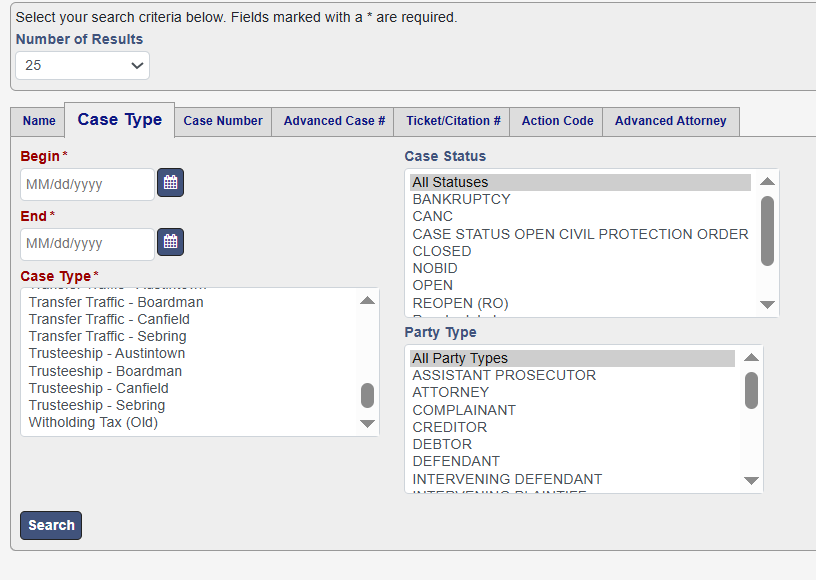
Mahoning County Clerk of Court records search begins by opening the official eCourts portal. This system connects directly to the county’s court filing office database, where all public case information is stored. Once the page loads, users see multiple search tabs for different lookup methods. Each tab is designed for a specific type of court record retrieval, such as name-based search or case number search, helping users quickly reach relevant judicial case lookup results.
Select Search Type Based on Available Details
The Mahoning County clerk records search system provides several search options depending on what information the user has. Selecting the correct method improves accuracy and reduces irrelevant results. Name search works best when party details are known, while case number search provides direct access to a specific file. Citation search helps locate traffic-related records, and advanced search allows deeper filtering across multiple case types within the legal database search system.
- Name Search → person-based lookup
- Case Number → direct case entry
- Citation Search → ticket records
- Advanced Search → filtered case review
Enter Accurate Case Information
Users must input correct and complete details into the search fields to retrieve accurate court filings. The system depends on exact matching, so even small spelling errors can affect results. Full legal names should be used instead of nicknames, and case numbers should be entered without mistakes. Date fields must follow the correct format for proper filtering. Accurate input helps the court record retrieval system return relevant judicial records without missing key case data.
Apply Filters for Refined Results
The eCourts search system includes filters that help narrow down large result sets in the Mahoning County clerk of court database. These filters improve accuracy when multiple cases share similar names or details. Users can refine results by selecting case type, status, party type, and filing date range. This structured filtering process helps organize public court records access and reduces unnecessary listings, making it easier to focus on relevant legal case history entries.
- Case Type: Civil, Criminal, Probate, Appeals
- Status: Open, Closed, Reopened
- Party Type: Plaintiff, Defendant, Attorney
- Date Range: Filing period selection
Review Search Results List
After submitting the search, the system displays a list of matching records from the judicial case lookup portal. Each entry includes basic case information such as case number, party names, filing date, and current status. Users can scan the list to identify the correct record before opening it. This step helps separate multiple similar entries and supports faster identification of relevant court filings within the Mahoning County legal database search system.
Open Full Case Record and Docket Details
Selecting a case opens detailed information that includes full docket history and filing records. Users can view court motions, hearing schedules, case updates, and final judgments if available. This section provides a complete view of legal case history stored in the court record retrieval system. Some records may show limited information depending on case type or confidentiality rules. This step is useful for reviewing structured judicial records across different court divisions.
What Records Can Be Viewed
The Mahoning County Clerk of Courts system provides access to multiple types of public court records, covering a wide range of legal matters. Users can view civil lawsuits, criminal cases, probate filings, domestic relations matters, and court docket entries. These records help track case progress and legal activity within the county court system. However, some sensitive or sealed records may not display full details due to Ohio public records restrictions and privacy rules.
Role and Responsibilities of Clerk of Court
Mahoning County Clerk of Courts handles official court administration tasks that support daily judicial operations. The office maintains court records, manages case filings, and processes legal documents for criminal, probate, and civil matters. It also issues certified copies and works closely with judges and attorneys to keep case information organized. This office functions as the main court filing office that Mahoning County residents rely on for structured record keeping and accurate case tracking across all court divisions.
Maintaining Court Records and Legal Record System
Mahoning County Clerk of Courts is responsible for maintaining complete and accurate court records for all filed cases. This includes storing civil, criminal, probate, and domestic relations documents in a structured legal record-keeping system. Each filing is recorded, indexed, and updated to reflect case progress. The system supports long-term preservation of judicial documents and ensures records remain available for public reference. Proper case file management helps maintain consistency across court operations and supports transparent judicial review.
Managing Case Filings and Court Submission Process
The clerk office manages all incoming case filings submitted through the court filing office of the Mahoning County system. Every legal document is reviewed, stamped, and entered into the case database for tracking. This includes complaints, motions, responses, and court petitions. Staff organize filings into correct case categories and assign them to appropriate court divisions. This structured process supports smooth court administration, Mahoning County operations, and ensures each case follows proper procedural workflow from filing to resolution.
Processing Legal Documents and Judicial Paperwork
Processing legal documents is a core responsibility of the clerk office, where all submissions undergo verification and classification. This includes reviewing documents for accuracy, recording filing dates, and updating case entries in the judicial document processing system. Each document is linked to its case file to maintain proper history and tracking. The process supports case file management and ensures all court records remain consistent, updated, and properly stored within the official court database system.
Issuing Certified Copies of Court RecordsThe
Mahoning County Clerk of Courts provides certified copies of court records for legal, personal, or official use. These documents include case filings, judgments, and docket entries verified by the court. Certified copies are often requested by attorneys, government agencies, and individuals involved in legal proceedings. The clerk ensures that each copy matches the original records stored in the legal record-keeping system. This function supports transparency and provides authenticated documentation for court-related needs.
Coordinating with Judges and Attorneys
The clerk’s office plays a key role in court operations support by coordinating daily activities with judges, attorneys, and court staff. This includes scheduling hearings, managing case calendars, and ensuring all filings are available before court sessions. The office also communicates updates regarding case status and procedural requirements. This coordination helps maintain smooth court administration in Mahoning County and supports the timely movement of cases through different judicial stages without delays or record inconsistencies.
Court Filing Services
Mahoning County Clerk of Courts provides structured services for submitting civil and criminal documents through an organized court filing system. These services cover case initiation forms, motions, and supporting legal paperwork required for court proceedings. The office handles each submission through a regulated document submission system that records, processes, and stores case information. This service supports smooth court operations Ohio residents depend on for accurate legal record handling and consistent case tracking across different court divisions.
Civil and Criminal Document Submission
Mahoning County court filing services Ohio support the intake of civil and criminal case documents. This includes complaints, answers, petitions, and responses submitted by attorneys or individuals involved in legal matters. Each document goes through a case document submission process where it is reviewed and entered into the court system. Civil cases may involve disputes or damages, while criminal submissions relate to charges or legal actions. Proper handling supports accurate case registration workflow across the court system.
- Civil complaints and responses
- Criminal charges and motions
- Supporting affidavits and statements
- Case-related evidence submissions
Motion Submission Process in the Court System
Motion submission is an important part of the court paperwork processing system used by Mahoning County Clerk of Court. Attorneys and parties submit motions to request court actions such as hearings, dismissals, or extensions. Each motion is recorded through the legal filing procedures system and attached to the correct case file. The clerk ensures proper intake, indexing, and routing so judges can review requests without delay. This structured process supports efficient judicial workflow and organized case handling.
Case Initiation Forms and Registration Workflow
Case initiation forms are required to begin legal proceedings in Mahoning County courts. These forms start the case registration workflow, where new matters are entered into the court database. The clerk office reviews submitted documents, assigns case numbers, and categorizes them under the correct court division. This document submission process ensures each case is properly recorded from the beginning, supporting accurate tracking throughout the legal process. It also helps maintain consistency in court records and procedural compliance.
Legal Paperwork Handling and Compliance Standards
Mahoning County Clerk of Courts manages legal paperwork intake with strict attention to filing compliance requirements. Each document must meet formatting and procedural standards before acceptance. The office checks accuracy, assigns timestamps, and updates the legal record-keeping system. This ensures all submissions are properly stored and linked to case files. Proper handling reduces errors and supports reliable court operations Ohio-wide by maintaining structured and verified judicial records for future reference and case review.
Mahoning County E-Filing System
Mahoning County e-filing system provides an online method for submitting court documents without visiting the courthouse. This electronic court filing portal allows users to send civil, criminal, and other legal paperwork through a secure digital document submission process. It supports faster case processing and improves court filing services Ohio residents and legal professionals rely on for efficient case handling. The system records each submission in the court database for proper tracking and review
Mahoning County e-filing system works as an online legal filing system designed to handle court documents electronically. Users upload case-related files through a secure portal that connects directly to the court filing office. Each submission enters the court record system and is assigned to the correct case or new filing category. This reduces manual paperwork and supports structured court operations across different divisions, including civil, criminal, and domestic relations courts.
How Electronic Filing Works
Electronic filing in Mahoning County follows a structured process where documents are submitted, reviewed, and recorded digitally. Users upload legal forms, motions, or case documents into the electronic court filing portal. The system checks format requirements before accepting submissions. Once approved, documents are routed to the clerk office and added to the official case file. This digital document submission method improves accuracy and supports faster processing within the court system workflow.
Basic steps include:
- Create account or login
- Select case type or initiate new case
- Upload documents in required format
- Submit for clerk review
- Receive confirmation of acceptance
Benefits of E-Filing Compared to In-Person Filing
Mahoning County court filing services Ohio include both physical and electronic options, but e-filing offers faster and more efficient processing. It reduces travel needs and allows users to submit documents anytime. The system also improves accuracy by reducing manual entry errors. Digital tracking helps users monitor submission status easily. This modern approach supports better case document submission management and streamlines court workflows across multiple legal departments.
Key benefits:
- 24/7 submission availability
- Faster processing times
- Reduced paperwork handling
- Immediate submission confirmation
- Easy tracking of case documents
Who Can Use the E-Filing System
The Mahoning County e-filing system is available for multiple user groups depending on case requirements. Attorneys commonly use it for regular case submissions, while government agencies submit official documents through authorized access. Public users may also file certain case types depending on court rules. Each user type follows specific access levels within the electronic court filing portal to maintain proper control over legal document submission and ensure compliance with filing procedures.
Eligible users include:
- Licensed attorneys
- Court-approved agencies
- Self-represented litigants (limited access)
- Government departments
Importance of Digital Filing in Court Operations
The electronic filing system supports modern court operations by improving speed, accuracy, and organization of legal records. It reduces reliance on physical paperwork and helps maintain a structured legal database search system for case tracking. Judges, attorneys, and clerks benefit from quicker access to filed documents, which improves case management efficiency. This digital approach strengthens court administration in Mahoning County by supporting consistent and reliable handling of judicial documents across all case types.
Certified Court Records & Copy Requests
Mahoning County Clerk of Court provides certified court records that serve as officially verified court documents for legal and personal use. These records include authenticated legal records such as case filings, judgments, and docket entries that carry court validation. Users can request copies through the clerk office or official request channels. These court-approved copies hold legal value and are often required for legal proceedings, background checks, and administrative purposes within Ohio court systems.
What Certified Court Records Mean
Certified court records are official versions of case documents that carry verification from the clerk of court. These authenticated legal records confirm that the copies match original court files stored in the system. Certification includes an official seal, signature, and confirmation of accuracy. This process ensures that documents maintain legal integrity and can be used in courts, government offices, or other formal settings where proof of case history is required.
Key features include:
- Official court seal and stamp
- Clerk verification signature
- Exact match with original case file
- Legal acceptance in court proceedings
How to Request Court Copy Documents
Requests for Mahoning County clerk of court records can be made through official channels, either in person, by mail, or through approved online systems. Users must provide case details such as names, case numbers, or filing dates. The clerk office processes the request and prepares official court copies after verification. Processing time may vary depending on document type and request volume, especially for older or complex case files stored in archives.
Basic request steps:
- Provide case number or party name
- Submit request form (online or in-person)
- Pay applicable copy fees
- Wait for processing and verification
- Collect or receive certified copies
Record Certification Process
The record certification process ensures that official court documents match the original case files stored in the legal record keeping system. The clerk reviews each document, confirms accuracy, and applies certification marks. This process supports reliable case file management and maintains trust in judicial document processing. Certified copies are then issued as court-approved copies that can be used in legal proceedings or official documentation requirements across Ohio institutions.
Legal Validity of Certified Documents
Certified court records Ohio authorities recognize carry full legal validity in courts and government offices. These authenticated legal records can be used as evidence, proof of judgment, or official verification of case outcomes. Because they are issued directly by the clerk of court, they hold higher authority than standard copies. This legal recognition makes them essential for attorneys, agencies, and individuals involved in formal legal or administrative processes requiring verified documentation.
Importance of Certified Court Copies in Legal Use
Mahoning County Clerk of Court records play a key role in providing reliable documentation for legal needs. Court-approved copies support background verification, case appeals, property matters, and legal compliance requirements. These records help maintain transparency in court operations and provide trustworthy documentation for public and private use. Their structured certification process ensures consistency across all legal filings and supports accurate reference in future judicial proceedings.
Document Submission
Mahoning County court document submission system follows structured legal document standards to keep all filings consistent and properly recorded. Users must submit civil, criminal, or other court paperwork in the correct format, along with required supporting materials. The court filing services Ohio system checks each entry for compliance before acceptance. This process helps maintain filing compliance rules and supports accurate processing of case records across different court divisions in Mahoning County.
Formatting Rules for Court Documents
All submissions must follow legal document standards set by the court. Proper formatting helps the clerk office process files without delays or rejections. Documents should be clear, complete, and correctly structured before submission into the court document submission system. Incorrect formatting often leads to processing issues or return of paperwork.
Common formatting requirements include:
- Use standard legal fonts and readable text size
- Include correct case caption and case number
- Maintain proper page numbering
- Attach signatures where required
- Submit files in accepted formats (PDF preferred)
Required Documentation for Filing
Each case type in the court filing services Ohio system requires specific supporting documents. Missing paperwork can delay case registration or cause rejection during review. The clerk office checks all submissions against submission requirements before adding them to the official record.
Common required documents include:
- Complaint or petition forms
- Supporting affidavits or statements
- Identification details for parties involved
- Previous court orders (if applicable)
- Filing cover sheets or index forms
Filing Deadlines and Time Limits
Mahoning County court processes follow strict filing compliance rules that include deadlines for submitting legal documents. Missing a deadline can affect case progress or legal standing. Deadlines vary depending on case type, court division, and motion category. Users must submit documents within the allowed time frame to keep cases active and valid within the court system.
Key deadline types:
- Response deadlines for defendants
- Motion submission cut-off dates
- Appeal filing time limits
- Hearing-related document deadlines
Common Mistakes to Avoid During Submission
Errors in the court document submission system often cause delays or rejection of filings. Many issues come from incomplete forms, incorrect details, or missing attachments. Careful review before submission helps maintain smooth processing within the legal document handling system.
Frequent mistakes include:
- Missing signatures or notarization
- Incorrect case numbers or names
- Submitting the wrong document versions
- Ignoring formatting requirements
- Leaving required fields blank
Importance of Proper Submission Compliance
Following filing compliance rules supports efficient court operations and reduces processing delays. Proper document submission ensures that case files are correctly entered into the court record system and assigned to the right division. This improves accuracy in legal tracking and helps maintain reliable judicial records. Mahoning County court filing services Ohio depend on structured submissions to keep case workflows organized and consistent across all legal proceedings.
Court Administration & Case Management Role
Mahoning County court administration supports daily judicial operations by managing records, coordinating case movement, and maintaining organized court workflows. The clerk of courts Mahoning County office handles administrative tasks that keep civil, criminal, and probate cases properly tracked and updated. This includes organizing documents, supporting judges, and coordinating with attorneys. The system functions as a structured case management system that helps maintain order across court operations and ensures consistent handling of legal proceedings.
Administrative Support Functions in Court System
Court administration Mahoning County provides essential support services that keep court activities running smoothly. These functions include handling incoming filings, updating case status records, and managing court schedules. Administrative staff also assist with document verification and ensure all filings meet procedural standards. This support structure helps maintain a stable judicial workflow management process and allows judges and attorneys to focus on hearings and legal decisions without delays in record handling.
Key support tasks include:
- Processing incoming court filings
- Updating case status information
- Managing hearing schedules
- Assisting with document verification
- Supporting courtroom logistics
Case Tracking and Coordination System
The case management system used in Mahoning County ensures that every legal matter is tracked from filing to final resolution. Court staff coordinate case movement across different stages, including hearings, motions, and judgments. This coordination helps maintain accurate timelines and prevents case delays. Each entry is updated in real time within the court operations structure, allowing judges and attorneys to review current case status before proceedings.
Record Organization and Legal Information System
The clerk of courts Mahoning County office maintains a structured record organization system that stores all case-related documents in a centralized database. Each file is categorized by case type, number, and court division. This system supports efficient retrieval of legal documents and ensures accurate case history tracking. Proper organization helps reduce errors and supports long-term storage of judicial records for public reference and legal review.
Organized record types include:
- Civil case files
- Criminal case records
- Probate and estate documents
- Court docket entries
- Hearing summaries
Interaction with Judges and Attorneys
Court administration in Mahoning County works closely with judges and attorneys to support courtroom procedures and case scheduling. Administrative staff coordinate hearing dates, manage case calendars, and distribute updated filings before court sessions. This communication ensures that all parties have access to the latest case information. Strong coordination within the judicial workflow management system helps maintain smooth proceedings and reduces scheduling conflicts or documentation delays.
Importance of Court Operations Structure
The court operations structure in Mahoning County ensures that all administrative and case management tasks function in an organized flow. From filing intake to final judgment, each step is tracked and recorded in the case management system. This structure supports accuracy, transparency, and efficiency across court divisions. It also helps maintain reliable judicial records that reflect consistent updates and properly managed legal processes across the entire court system.
Public Access to Court Records
Mahoning County Clerk of Court records are part of Ohio’s public information system, allowing residents to review many case files and filings. These records are maintained through the court filing office Mahoning County and include civil, criminal, and probate case details. Public records access Ohio laws support transparency in judicial operations by allowing people to view selected case information. However, some records remain restricted based on privacy rules and court orders.
What Court Records Are Publicly Available
Many court filings in Mahoning County are open for public review through the clerk of courts system. These records provide insight into case activity, legal proceedings, and final outcomes. Public access supports transparency in judicial processes and allows users to track legal matters involving individuals or organizations.
Common public records include:
- Civil case filings and judgments
- Criminal case summaries and charges
- Probate and estate records
- Court docket entries and schedules
- Hearing dates and outcomes
These records are stored in the official legal record availability system for public reference.
Access Limitations on Court Records
Not all Mahoning County clerk of court records are available to the public. Some documents are restricted due to privacy laws, sealed court orders, or sensitive case types. Juvenile records, confidential family cases, and certain criminal investigations may not appear in public searches. These limitations protect personal privacy while maintaining structured access within the court filing office of Mahoning County.
Common restricted record types:
- Juvenile court cases
- Sealed criminal records
- Adoption and custody details
- Sensitive domestic relations filings
- Ongoing investigation files
Ohio Public Records Law
Ohio public records law defines how court documents can be shared with the public. It supports transparency in judiciary operations by allowing access to government-held records unless legally restricted. Courts must provide reasonable access to records upon request, while still protecting confidential information. This balance helps maintain both public accountability and privacy within the legal system.
The law applies to most court filing office Mahoning County records, ensuring that eligible documents remain available for inspection or copying under official procedures.
How to Request Access to Court Records
Requests for Mahoning County clerk of court records can be made through official channels, including in-person visits, written requests, or approved online systems. Users must provide sufficient case details to help staff locate the correct files. The clerk office then processes the request according to public records access Ohio rules.
Steps to request records:
- Provide case name or number
- Submit request form to clerk office
- Specify document type needed
- Pay applicable copy fees (if required)
- Receive or inspect requested records
Importance of Public Access in Court System
Public access to court records supports accountability and transparency in judiciary operations. It allows individuals, attorneys, and researchers to review case histories and legal outcomes. The Mahoning County clerk of court records system helps maintain open access while following legal restrictions. This structured approach ensures reliable legal record availability and supports fair access to court information within Ohio’s judicial framework.
Frequently Asked Questions
Mahoning County Clerk of Courts handles official court records, filings, and document management for civil, criminal, and probate cases. The clerk of courts Mahoning County office also supports public record requests, certified copies, and electronic filing services. Below are common questions that explain how the judicial records system works, how court filings are processed, and how public legal records access is managed under Ohio court procedures.
What does the Mahoning County Clerk of Court do?
Mahoning County Clerk of Court manages official case records, court filings, and legal document processing for county courts. The office maintains civil, criminal, and probate case files in a structured judicial records system. It also issues certified copies, updates case information, and supports coordination between judges, attorneys, and the public. This role helps maintain organized court filing procedures and ensures accurate tracking of all legal cases handled in the county court system.
How do I search court records in Mahoning County?
Court records can be searched using the official Mahoning County online case search system. Users can look up cases using a name, case number, or filing date. The system displays docket entries, case status, and filing history for review. This public legal records access system allows users to find civil, criminal, and probate case details in a structured format, making it easier to track legal case activity across different court divisions.
Can I access certified court records online?
Certified court records are not always available for full online download. Users can view basic case information online, but certified copies usually require a formal request through the clerk office. These certified documents are officially verified and carry legal authority. They are issued after review by the clerk of courts Mahoning County office and may be provided in person, by mail, or through approved request systems depending on court policies.
What is the e-filing system in Ohio courts?
The Ohio e-filing system is an electronic platform used to submit court documents online. It allows attorneys, agencies, and eligible users to upload legal paperwork directly into the judicial records system. This reduces manual processing and supports faster court filing procedures. Documents submitted through the system are reviewed by the clerk’s office before being added to official case files, improving efficiency in court operations.
How do I file documents with the clerk of court?
Documents can be filed through in-person submission or electronic filing systems where available. Users must complete required forms, attach supporting documents, and follow court filing procedures. The clerk office reviews each submission for accuracy before adding it to the case record. This process ensures proper handling within the Mahoning County clerk of court system and maintains consistency in legal record processing.
Are court records public in Mahoning County?
Most court records in Mahoning County are part of public legal records access under Ohio law. This includes civil, criminal, and probate case information. However, some records may be restricted due to privacy laws or court sealing orders. Juvenile cases and sensitive family matters are often not publicly available. The judicial records system balances transparency with legal privacy requirements while providing access to eligible case information.